Research, History, and Being a Story Finder
I feel as if being a historian is being a story finder. The archives—whether dust coated boxes or data centers—are full of narratives and assumptions inscribed and put upon them. The sources, by themselves, do not make up truth, it is the space between sources, what is left out, that makes a kind of truth. Especially when you put them against one another.1 No one person can write the same history as another, scouring and digging in the same archives. Like a puzzle piece, each person is gravitated to one piece, then another, all informed by the puzzles they have assembled before. Much like the fiction writer—a historian does best with practice and help from others.2 I reject the idea that history is a solo-activity meant to perish on words on a page. History is meant to be argued, grieved, celebrated, and questioned. The question I have now, facing my graduation and impending doom—has me feeling all the more brooding and philosophical. What good is history and art?
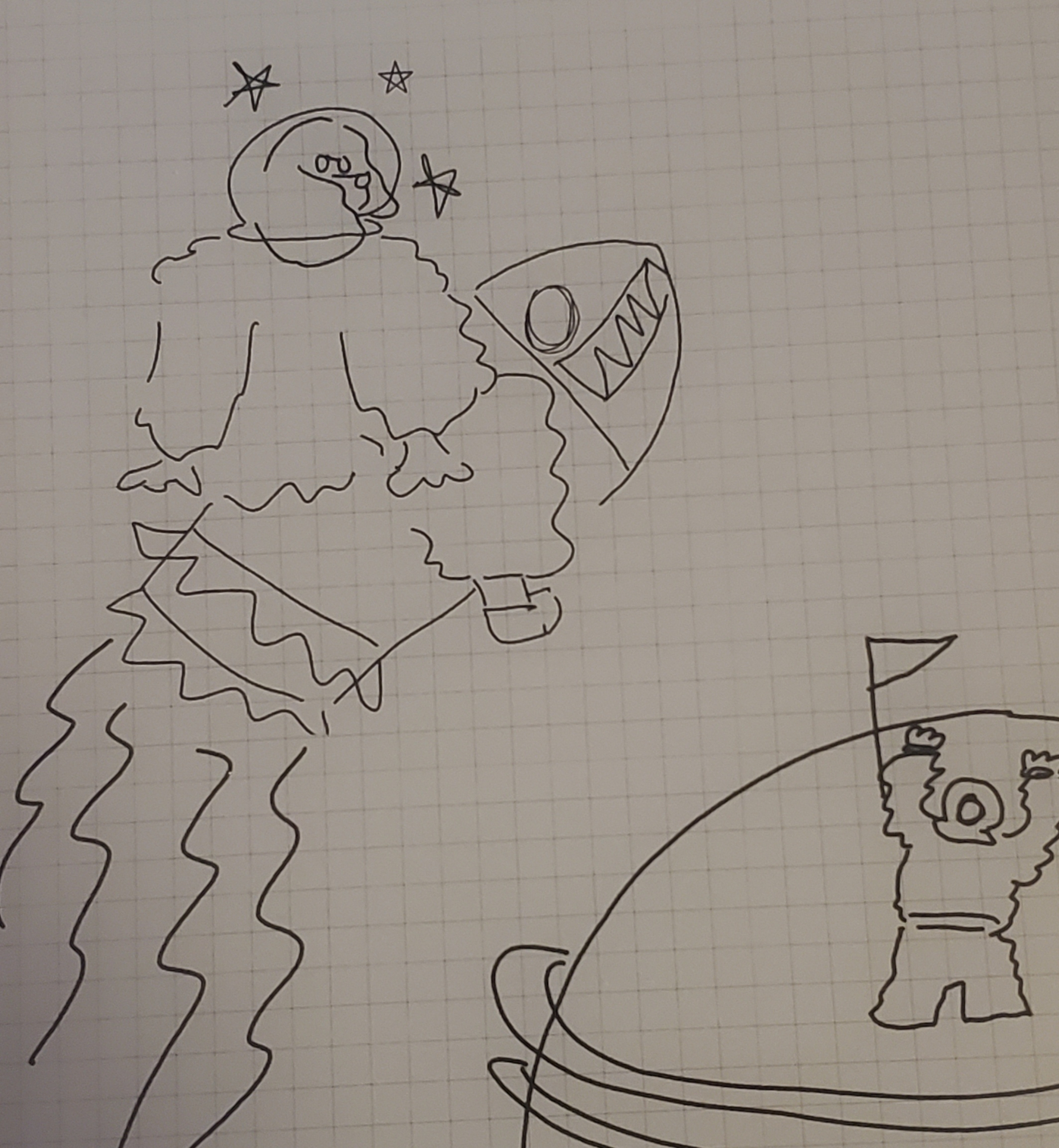
“But fiction is not the opposite of truth. Fiction means ‘created by imagination.’ And there is plenty of evidence everywhere in literature and art that imagination can get as close to truth as studious fact-finding can.” — James Alexander Thom3
Well, it takes community.
My favorite moments have been sharing the stories I find, or that find me. I have worked as a docent at a non-profit art gallery, and my favorite moments, are the stories the patrons share with me. I typically would start the conversation, ask for their opinion, and keep asking while trying my best to answer their questions. You learn more about people when you find that you’re both in search of a good story. Not a particularly moral or existential one, but one that makes you ask their name, and why they are here. It is these meetings that make me want to research more. Meeting people and getting to know them often introduces me to new ideas, thoughts and my favorite, reminders. To be a story finder is to puzzle over ideas—one will do. David Lynch is right about ideas.
“An idea is a thought. It’s a thought that holds more than you think it does when you receive it…It would be great if the entire film came all at once. But comes, for me, in fragments. The first fragment is like the Rosetta Stone. It’s the piece of the puzzle that indicates the rest. It’s a hopeful puzzle piece."4
One idea can act as a Rosetta Stone, the puzzle piece which shimmers a voidmirror. To use this Rosetta Stone, we rely on others to help translate these ideas as well. Scholars in history and physics have more in common with video game developers and home improvement bloggers than they might think. To be a story finder is to have what Umberto Eco calls “academic humility,” you can learn a lot from unlikely sources.5 Citation is the ultimate form of respect. We should cite others more, I know I need to. They look different but function the same: acknowledgments, thanks, dedications, features, producer tags—all speak the language of respect. Respecting that creation comes from accumulation, confluence, influence—to flow into.6 These reports of respect are part of research—to search again.7 A story finder pays their respects and reports back.
How does one tell the story they find?
This is a question I think stops me the most. In my research I have come across stories where I selfishly want to make up the rest. I want to fill in the unknowns, I want to expose its honesty. Burial by exposure. I love this carrion. I get a feeling, idea, thought, image, speech, something that tells me its more true in a piece of fiction. Other times, the story is so richly detailed that it cannot be told any other way than a non-fiction piece which revels in the unknowing of what we call the “past.” These lines can blur, and often do. The first step to finishing something is to get over yourself. To “become” requires either the shame of not being the thing you said you’d be—or, finding out after a while what you are. Either way, your actions define you. For instance, I was still a historian, a story finder, when I was a janitor. I found that I can be fulfilled doing work like that for the rest of my life, if my body would allow it. I became a historian of bureaucratic refuse. I scrap-booked trash, poorly taken instant film, petty work drama notes, candy wrappers, perfectly good stationery. I’ve made up stories of the stragglers. Those who stayed to work out in the gym, shit, and clean themselves up with DudeWipes™. There was a woman who stayed late every Friday for at least a month. Curling her hair, blotting the lipstick. As a janitor, no one sees you, but you see the things they leave behind, or are doing. A janitor makes a good historian. I got to listen to audio-books, audio-dramas, and podcasts. Imagination! Who can sing thy force? I found stories, and they found me.
How does one make the time?
Time cannot be wasted because it doesn’t care. Time is imagined. Often, when I say out loud, “I won’t read this.” I end up reading it anyway. But I meant what I said when I said it. That declaration of meaninglessness is important to keep getting the work done. You’ll find out what you do want to do quickly when you realize: you’re a great ape with no hair, small muscle, and an unfortunately large head.
What good is history and art?
They are good at capturing actions and persisting reactions. They don’t need to have a utility. No need to be good in quality or message. Their existence in the first place is enough. Much like how we are made by our own and others actions and choices. So, be nice to the janitor, wrap the gum.
-
See Trouillot, Silencing the Past: Power and the Production of History (1995) and introduction of Comics and the World Wars: A Cultural Record by Chapman, Sherif, Hoyles, and Kerr (2015) on conversations concerning the silences that enter the production of “history,” and by understanding that historical sources hold intrinsic and extrinsic narratives that shape their use in history and their use contemporaneously. A suggested methodology is to do close-reading, deconstruction, and cross referencing. ↩︎
-
For more information on the similarities and differences between historical fiction and non-fiction history (that line is blurry in exciting and frustrating ways), see James Alexander Thom’s The Art and Craft of Writing Historical Fiction (2011). According to Thom, a historian points backwards in time, and a historical novelist “stands beside you.” I think both are tools in a story finder’s toolbox. (40, Libby, EPUB) ↩︎
-
Thom, The Art and Craft of Writing Historical Fiction, 20. (Libby, EPUB) Also, this image doesn’t exist anymore! I drew it in my Supernote Nomad, and I didn’t want it there anymore. It is digital garbage, but archived here! In more digital garbage! ↩︎
-
David Lynch, Catching the Big Fish: Meditation, Consciousness, and Creativity. Audiobook. 16:00-16:45. (Chapter: Ideas, 23pg.) ↩︎
-
Umberto Eco, How to Write a Thesis, 190. (Kindle, 2015) ↩︎
-
Steven Johnson, The Invention of Air, 56. (2008) Johnson is discussing that “great men” don’t make history alone, “The whole notion of intellectual circulation or flow is embedded in the word ‘influence’ itself (‘to flow into,’ influere in the original Latin).” I recommend this book if interested in the history of science. ↩︎
-
Thom, The Art and Craft of Writing Historical Fiction, 79. (Libby, EPUB) ↩︎